Fetch API in ReactJS
 Heather
0
08.06 23:24
Heather
0
08.06 23:24
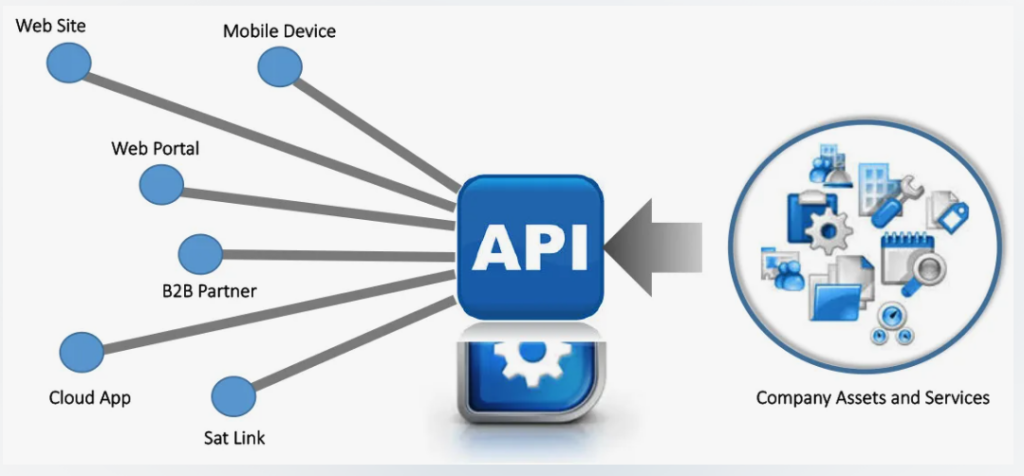 React provides multiple methods to fetch data from APIs and handle it within elements for dynamic rendering. Using fetch(): Built-in methodology to retrieve information from APIs. Using Axios: agreement international Popular library for simplified HTTP requests. State Management: Store and update fetched data utilizing state. Async Handling: Manage loading and error states throughout requests. The fetch() methodology in JavaScript is used to make community requests (such as HTTP requests) and fetch knowledge from a specified URL. It returns a Promise that resolves to the Response object representing the response to the request. Axios library is a well-liked, promise-primarily based JavaScript library used to make HTTP requests from the browser or NodeJS. It simplifies making requests to APIs, handling responses, and managing errors compared to the native fetch() technique. Note: The version quantity could differ barely depending on the latest launch. As of early 2025, version 1.6.x is common. This React component makes use of axios to fetch data from an API when the element mounts. It stores the fetched data within the state and shows the customers' username, title, and email once the data is loaded.
 If the info just isn't loaded, it shows a loading message. SWR is a knowledge-fetching library developed by vercel that makes it simple to fetch and cache data in React purposes. The concept behind SWR is simple: fetch knowledge, use stale data for speedy UI rendering, and revalidate it within the background to get contemporary information. SWR consists of useState() and useEffect(), so there isn't a have to import them. Step 2: Import all the packages wanted for the App. SWR mechanically handles caching, background revalidation, and state administration for data fetching. The useSWR hook fetches the information and handles the logic for loading, error, and success states. It supplies an automated re-fetching of knowledge if the element re-renders or if the information turns into stale. React Query is another powerful library that simplifies information fetching, caching, synchronization, and extra. It is nice for applications the place the information adjustments regularly and also you want efficient, real-time data fetching with minimal boilerplate. React Query’s useQuery hook is used to fetch knowledge and handle state. It mechanically handles caching, background refetching, and error handling. If the data continues to be loading, it exhibits a loading message. If there's an error, it displays an error message. A customized hook in React is an everyday Javascript perform that lets you reuse logic throughout different parts. It's constructed using React's built-in hooks like useState and useEffect. Custom hooks make your code cleaner and easier to manage by putting shared performance in a single place. For example:- if you happen to fetch data in several elements, you'll be able to write a custom hook like useFetch to handle it.
In Artificial Intelligence, large language models (LLMs) have change into important, tailored for particular duties, relatively than monolithic entities. The AI world today has venture-built fashions that have heavy-obligation efficiency in effectively-defined domains - be it coding assistants who've figured out developer workflows, or research agents navigating content material throughout the huge info hub autonomously. On this piece, we analyse some of one of the best SOTA LLMs that tackle elementary issues whereas incorporating important shifts in how we get data and produce original content. Understanding the distinct orientations will assist professionals select the most effective AI-tailored software for their explicit wants while closely adhering to the frequent reminders in an increasingly AI-enhanced workstation environment. Note: This is my expertise with all of the mentioned SOTA LLMs, and it may vary together with your use cases. Claude 3.7 Sonnet has emerged because the unbeatable leader (SOTA LLMs) in coding associated works and software program growth in the continually changing world of AI.
Now, although the model was launched on February 24, 2025, it has been equipped with such abilities that may work wonders in areas beyond. Based on some, it isn't an incremental enchancment however, moderately, a break-by leap that redefines all that can be finished with AI-assisted programming. End to finish Software Development: From preliminary challenge conception to final deployment, Claude handles all the software development lifecycle with exceptional precision. Comprehensive Code Generation: Generates excessive-quality, context-conscious code throughout a number of programming languages. Intelligent Debugging: Possibly identifies, explains and solves complicated coding problems with human-bean-like reasoning. Large Context Window: Supports as much as 128K output tokens, enabling comprehensive code era and complex project planning. Hybrid reasoning: Unmatched adaptability to assume and motive via advanced duties. Extended context window: As much as 128K output tokens (more than 15 instances longer than earlier versions). Multimodal advantage: Excellent efficiency in coding, vision, and textual content-primarily based duties. Low hallucination: Highly legitimate knowledge retrieval and question answering. Transparent, step-by-step thinking processes will be observed.

